

New Head of Growth and Accounts Santiago Paredes-Pinzón joined Wood Thilsted in December 2025 to take charge of global sales and business development initiatives. To mark Santiago joining Wood Thilsted, we decided to ask him about why he has joined our Company and his plans for the year ahead.
1. Why did you decide to join Wood Thilsted and why now?
Wood Thilsted’s agility as a leading global wind energy engineering company makes it very appealing and interesting. I was attracted to the company by the prospect of what Wood Thilsted can do going forward, and how I can be part of that.
Moreover, as a young company the principles upon which it was founded – accelerating the green energy transition – is something very close to me and the alignment with my own personal values is clear.
A big driver for me is service and giving back to the community. Wood Thilsted’s commitment to sustainability and the communities where it operates can be seen through its B Corp status. It demonstrates that the company aims to create positive impact beyond just generating profit.
Finally, I’m excited about future opportunities. The offshore wind sector is a major pillar of the energy transition and there is enthusiasm about what Wood Thilsted can achieve and how, through offshore wind, it can contribute to decarbonising economies around the world.
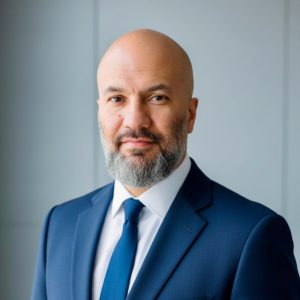
Head of Growth and Accounts
2. What are going to be your main priorities over the next year?
This year is all about clients. It’s about understanding how we can support them in an ever-changing and often challenging offshore wind landscape. We need to focus on delivering what clients truly need ensuring that the company provides solutions and services that meet client requirements effectively.
Furthermore, we must continue to build strong client relationships with an emphasis on listening, guiding and helping clients navigate uncertainty.
3. What should companies working in the offshore wind sector be thinking about as we enter 2026?
As we enter 2026, companies in the offshore wind sector should be focused on managing significant market volatility and ensuring their projects remain investable. For developers, the key challenge is securing, progressing, and maintaining an investable project.
In the current environment, discipline in terms of Final Investment Decision (FID) process is more important than ever. The timeline between project approval and FID continues to compress, making it essential to streamline processes. However, FID cannot proceed in uncertain conditions – developers must have confidence in revenue mechanisms, grid readiness, permitting status, and the supply chain. Success depends on clearly understanding which key activities must be completed before FID and how close to FID they need to be. Some tasks will be more critical than others.
The goal is to preserve confidence and reach FID with the same level of assurance as in more stable market conditions.
4. How does the sector overcome the headwinds that it is currently facing?
Companies must become more adept at managing market volatility more effectively. Companies need strategies to navigate the unpredictable and fluctuating offshore wind market conditions.
A key requirement is balancing project-level and portfolio-level thinking. In periods of uncertainty, project is “king” but maintaining portfolio resilience is important, too. A well-structured portfolio can provide optionality and robustness, enabling developers to manage delivery challenges through shared procurement strategies, staggered demand, and alignment on technical standards. The objective is to prioritise project delivery while leveraging the strategic benefits of a broader pipeline, rather than pursuing a portfolio for its own sake.
Deep and long‑term supply‑chain relationships are also critical. Developers with diversified portfolios are better positioned to secure supplier commitment and reduce risk premiums, whereas single‑project developers face greater exposure. More collaborative partnerships across the supply chain will be essential to navigating cost pressures and capacity constraints throughout 2026 – an area the Wood Thilsted Advisory team is well-placed to support.
5. How confident are you about the future of global offshore wind? Where are the biggest opportunities globally for the sector?
Taking a few steps back, we as an industry have proven that offshore wind is viable and scalable. Comparative costs have fallen significantly over the past decade, and the sector has shown it can deliver large volumes of clean energy reliably.
With continued progress in market design and regulatory frameworks, the long‑term outlook for global offshore wind remains very strong.
Europe and Asia-Pacific remain major growth regions. Both regions view offshore wind as a key solution for energy security and to meet the demands of rapidly growing, high‑demand sectors such as data centres and electrified industry.
These drivers exist even before factoring in Net Zero commitments, meaning demand for offshore wind capacity is robust and enduring.
In sum, recent historical achievements in offshore wind show its feasibility, while future trends highlight the urgent need for more offshore wind capacity – including in new markets and deeper waters. As the industry expands into these new frontiers, it is essential to maintain a holistic approach and solutions‑focused mindset: every site and development is unique.
This is an area where Wood Thilsted has a clear leadership position. We have delivered best‑in‑class fixed‑bottom foundation designs, including monopiles engineered for far deeper waters than once thought feasible, supported by innovations such as PISA. We recognise that there are technical solutions to deepwater offshore wind that were not obvious even a few years ago. Staying customer‑focused, agile, and innovative is critical to delivering the green energy transition – this is central to Wood Thilsted’s DNA.
6. If you could go back in time, what advice would you give the 25-year-old version of yourself?
Learn to be more present. Work is sometimes challenging and difficulties might seem ever present but learn to appreciate experiences instead of rushing through them.
Balancing professional performance with personal wellbeing is important too as is trusting that the future will unfold. There is no need to stress excessively about what comes next; it will arrive in its own time.
7. What excites you most about Wood Thilsted’s work?
Wood Thilsted is at the forefront of what it does. It has kept its leading edge and for me its work presents a meaningful challenge. It has exceptional team culture from senior leaders to young engineers. I’ve found my colleagues to be driven, committed and eager to make a positive impact – it’s an exciting place to be!
8. What are your interests outside of work?
Wind energy has been my passion for over two decades however I have a strong musical background and played with a celebrated Colombian rock band called Ultrágeno as a bass player. I recorded two albums with them. We stopped playing in 2001, however we played a few comeback concerts in 2007, and in 2017 shot a documentary that proved that there was strong interest in our band. You can find some of the footage on YouTube.
Santiago Paredes-Pinzon can be contacted at spp@woodthilsted.com and also can be found on LinkedIn.